
Do you have an issue with your gutters?
Give us a call at McMillan Roofing and Maintenance, or send an email to see how we can help!
UK Gutter Lifespans & Replacement Data
Most domestic gutters in the UK last between 15 and 30 years, though the exact service life depends heavily on the material, UV exposure, and whether water is allowed to pool. For homeowners weighing repair against replacement, age is a useful baseline, though physical condition is the deciding factor:
Under 10
Years old
Issues are almost always caused by installation faults (such as poor fall), blockages, or single failed clips rather than material failure.
10 - 20
Years old
Targeted repairs (replacing perished rubber union seals or individual brackets) are usually cost-effective.
Over 20
Years old
Full replacement becomes more economical when multiple joints leak simultaneously, brackets fatigue, or uPVC sections become brittle and warped.
Lifespan, Failure Modes, and Maintenance
uPVC
15 - 25 Years
Perished rubber seals, UV brittleness, thermal warping
Low upfront cost; requires joint/seal checks from year 10 onwards
Aluminium
20 - 40 Years
Impact damage (e.g., ladders), failed joint sealant (sectional only), coating scratches
Rust-proof; seamless systems eliminate joint leaks
Galvanised Steel
15 - 25 Years
Corrosion once the protective zinc coating is scratched or worn by standing silt
Strong against snow/ladder loads; requires periodic coating checks
Cast Iron
40 - 75+ Years
Rusting from neglected paintwork, cracked joints, heavy weight pulling on failing timber fascias
High maintenance (requires repainting every few years); often mandatory in conservation areas
Homeowner Maintenance Best Practices
Clean Twice Annually
Clear gutters in late autumn (once surrounding deciduous trees have shed their leaves) and late spring
Check During Heavy Rain
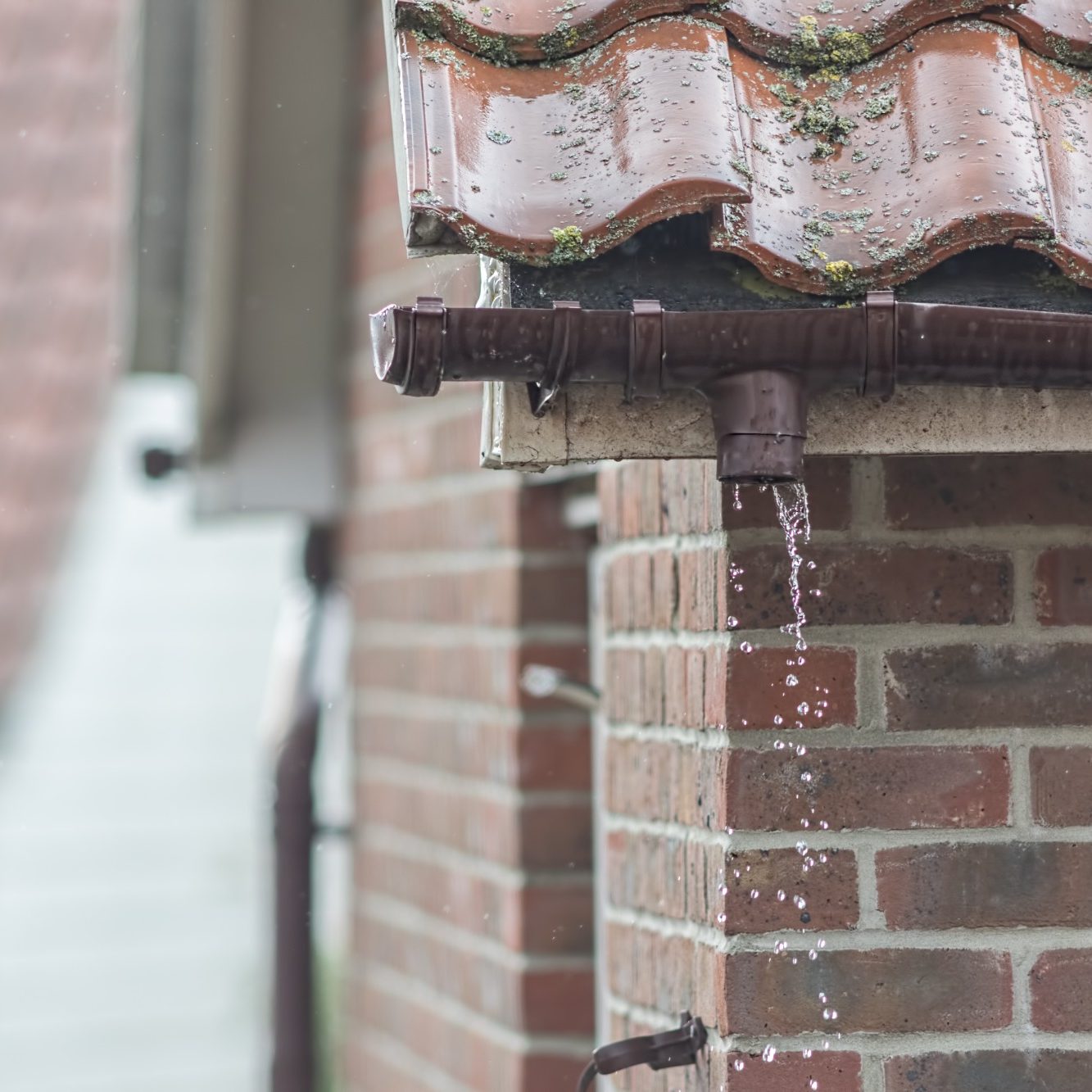
Homeowners should inspect their roofline from ground level during a downpour. Dripping joints, water sheeting over the front lip, or damp patches on brickwork beneath the eaves are the earliest indicators of a hidden blockage or failed union seal.
Watch for Secondary Roof Damage
Blocked gutters are one of the leading causes of penetrating damp, rotten timber fascia boards, and spalling brickwork (where saturated bricks freeze and crack in winter). A £100–£200 gutter clear could prevent thousands in masonry and timber repairs.
Avoid Ladder Weight on Gutters
Leaning an aluminium ladder directly against a uPVC or thin-gauge metal gutter will crack brackets and distort the profile. We always recommend ladder stand-offs that rest on the wall or roof tiles rather than the gutter channel.
So What Does It Cost?
Unfortunately there's not a one stop shop for pricing but here's a few ideas that may help:
At McMillan Roofing and Maintenance we charge a callout fee of £50 and £5 per linear metre for gutter cleaning
With so many designs and colours on the market, gutter replacement prices will be significantly different per customer. Try to budget £55 per linear metre (excluding any scaffolding costs)
Call us to discuss ad-hoc gutter repairs, replacement downpipes and any issues you may incur. All our work is guaranteed.
Relevant British Standards
BS EN 12056-3:2000
The core design standard referenced by Building Regulations. It dictates how to calculate Effective Roof Area (accounting for roof pitch, as a 30° pitch increases catchment area by ~29% compared to a flat plan) and requires domestic systems across most of England and Wales to handle a rainfall intensity of 75 mm/hour (rising to 100–150 mm/hour in high-rainfall regions like Cumbria, Wales, and Western Scotland).
BS EN 612:2005 & BS 9101:2017
Cover metal sheet eaves gutters (zinc, copper, steel) and steel/aluminium rainwater systems, specifying load resistance against snow, wind, and water weight. (Cast and extruded metal systems fall under BS 8530.)
BS EN 1462:2004 (Brackets for eaves gutters)
Establishes load-bearing and corrosion requirements for fascia and rafter brackets. In areas prone to heavy snow or high winds, specifying Class H (Heavy Duty) brackets under this standard prevents sagging and pull-out.
Building Regulations Approved Document H (Section H3 – Rainwater Drainage)
Governs roof drainage in England and Wales (with Section 3.6 of the Technical Handbooks applying in Scotland and Part N in Northern Ireland). It requires rainwater to discharge into a surface water drain or soakaway—never into a foul water sewer unless the property has an approved combined system.